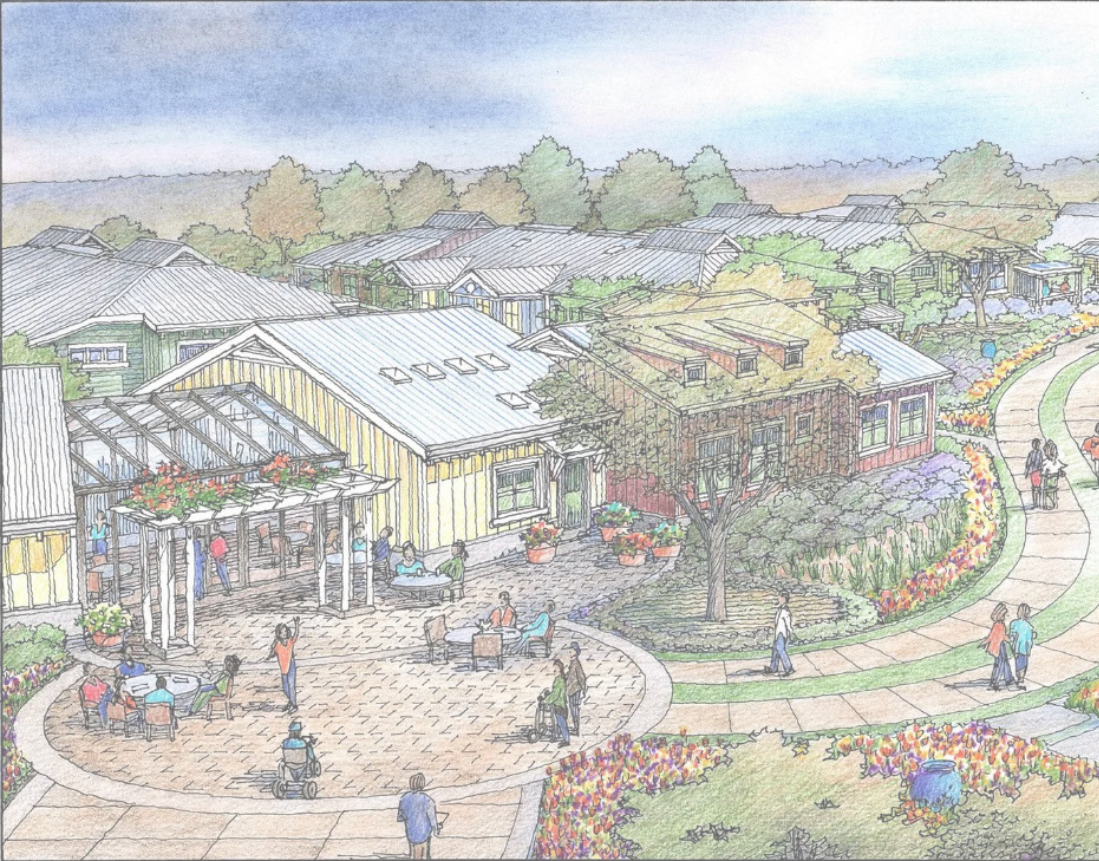
A drawing of a garden with people sitting at tables

Neuro-inclusive cohousing consists of intentional communities that are designed to support and accommodate people with a wide range of neurological differences, such as autism spectrum disorder, dyslexia, Tourette syndrome, ADHD, and other developmental disabilities. These communities provide safe spaces for individuals who may have difficulty navigating traditional living environments due to their unique neurology and specific needs. By creating supportive structures within these communities, members can benefit from shared resources while still having access to the autonomy needed for personal growth. Neuro-inclusive cohousing has grown in popularity among those seeking a more inclusive lifestyle or looking for social opportunities tailored to their specific needs.


Storefront windows displaying the word HOPE
By Natalie Leek, Rising Heights • October 28, 2026
40% of adults with IDD face housing insecurity. Here's what's actually driving the crisis, why traditional solutions fall short, and what genuine co-housing models prove is possible.
Family and support professionals meeting around a table
By Natalie Leek, Rising Heights • October 14, 2026
When school ends, so does the IEP team. Here's who actually coordinates your adult child's care after that, and how Ohio families can build their own support structure.
By Natalie Leek, Rising Heights • September 30, 2026
Work identity for teens with IDD starts years before graduation. Here's what pre-employment skill building actually looks like and how families can start now, at any age.
By Natalie Leek, Rising Heights • September 16, 2026
Subsidized work often caps income for adults with IDD. Here's how gig economy work is creating real income and independence — and what's needed to make this path more accessible.
Classroom
By Natalie Leek, Rising Heights • September 2, 2026
Virtual-only DSP training meets compliance requirements, but is it actually preparing caregivers? Here's how training gaps connect to Ohio's direct care turnover crisis.
By Natalie Leek, Rising Heights • August 19, 2026
Turning 18 makes your child a legal adult, regardless of their support needs. Here's what changes, what your options are, and how Ohio families can plan guardianship decisions well.
home
By Natalie Leek, Rising Heights • August 5, 2026
Trailhead Community in Colorado and Faison Residence in Virginia prove inclusive IDD housing works. Here's what makes these models succeed — and what Rising Heights is building in Cleveland.
Parentswalkingachild
By Natalie Leek, Rising Heights • July 22, 2026
School services end at 22. Families call it "the cliff" for a reason. Here's an honest, practical guide for Ohio families navigating the transition out of school-based IDD supports.
Fatherandsontalking
By Natalie Leek, Rising Heights • July 1, 2026
Confused by "transition goals" in your child's IEP? Here's a plain-language guide for parents of middle and high schoolers with IDD on what it means and how to start planning early.
Two people smiling, one in a blue graduation cap with a rainbow lei, standing against a concrete wall.
By Natalie Leek, Rising Heights • March 24, 2026
Your teen with IDD is hitting milestones every day — they just don't look like the ones in the parenting books. Here's how to see them, celebrate them, and plan for what's ahead.
Show More